


Context
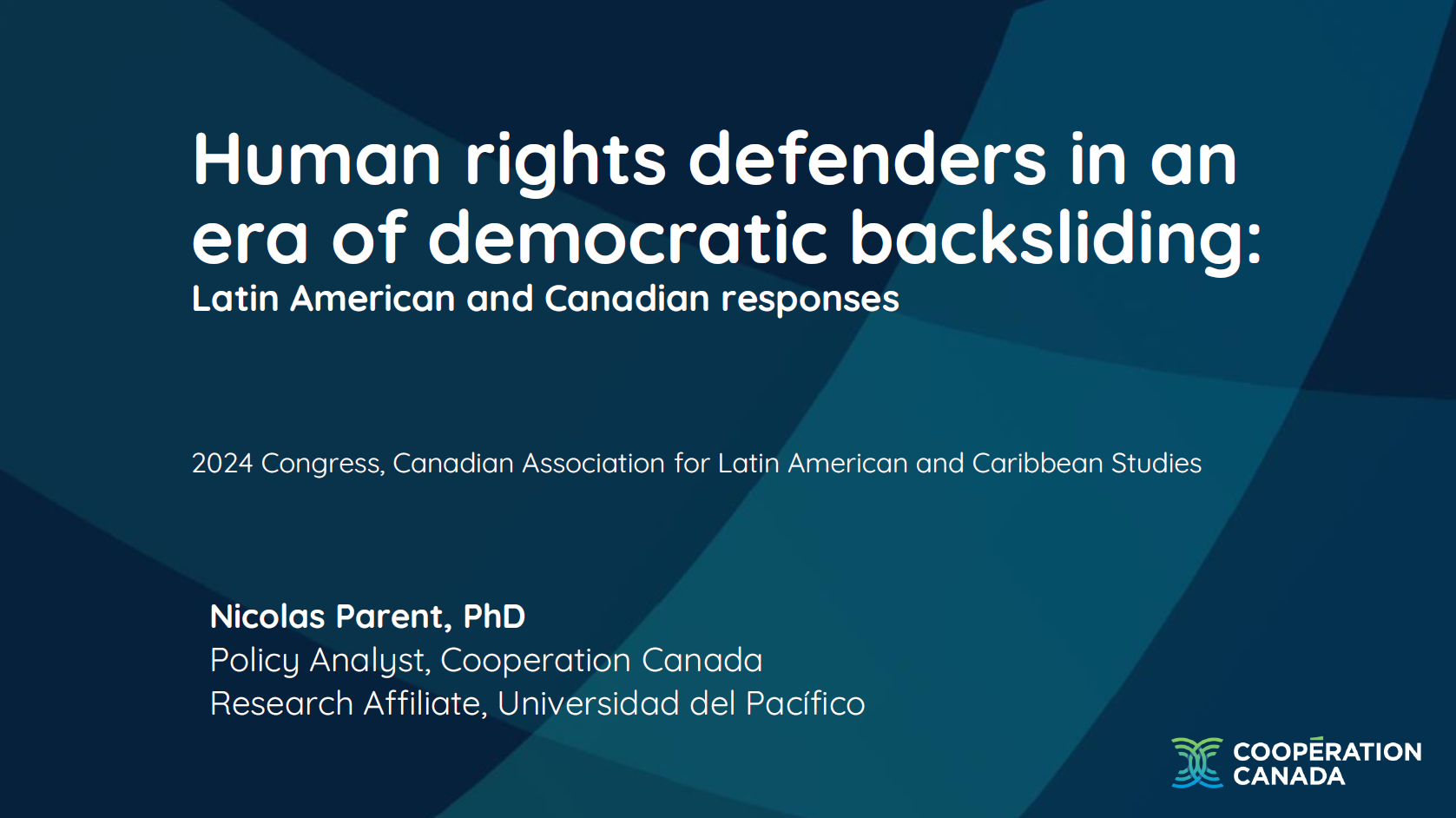
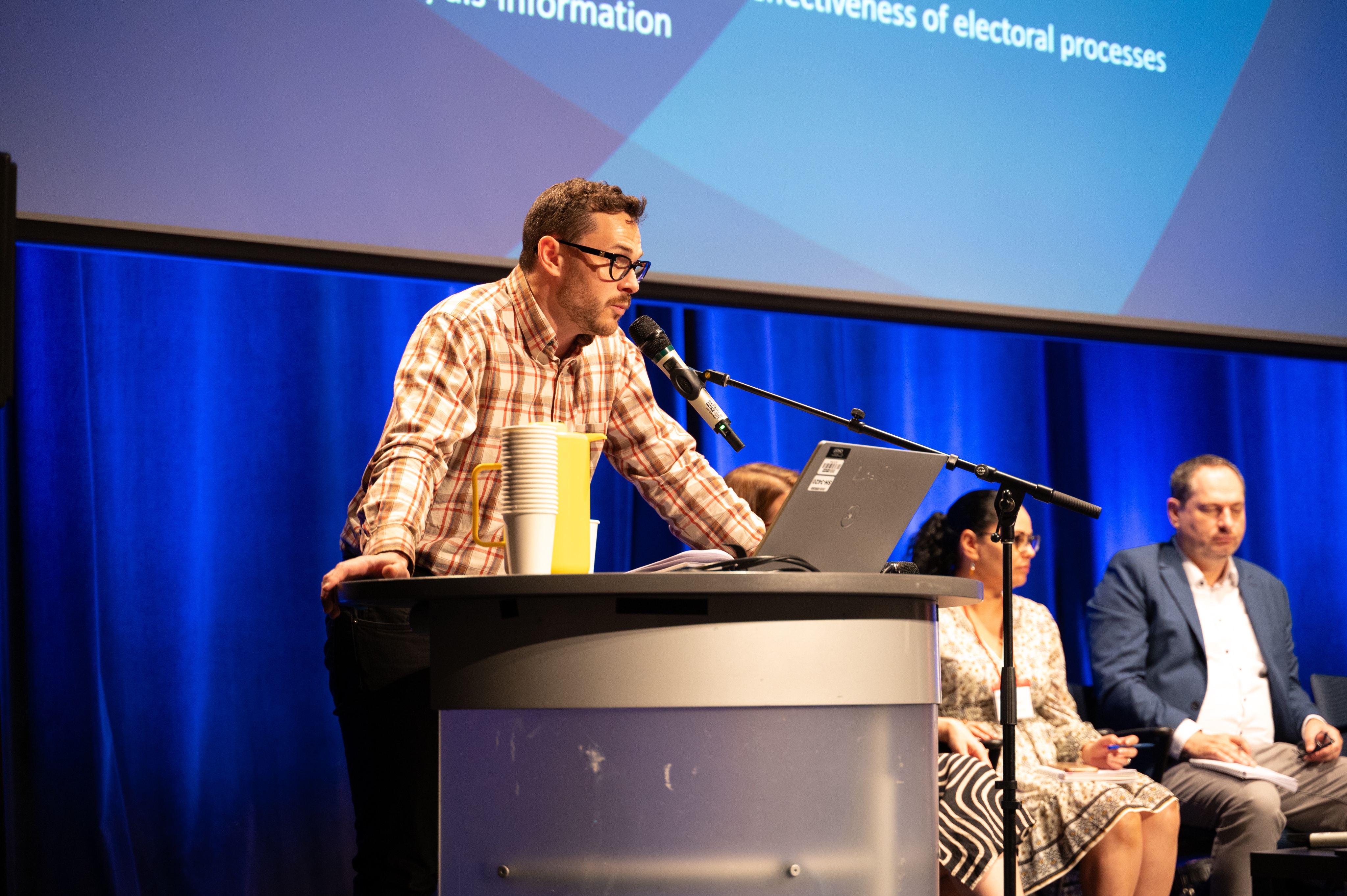
In recent years, the world has witnessed a marked democratic backsliding, with electoral democracies at their lowest levels since 1986 and 72% of the global population now living under autocratic regimes—a 46% increase over the past decade (V-Dem, 2023). Both external and internal factors have contributed to this decline, which in turn has led to escalating violence against human rights defenders (HRDs). HRDs are critical frontline defenders of justice and rights, yet they face mounting aggression. This presentation, titled “Human Rights Defenders in an Era of Democratic Backsliding: Latin American and Canadian Responses,” examines the multifaceted responses from Latin America and Canada to the violence against HRDs amidst democratic regression. It was presented as part of the featured panel at the Annual CALACS Congress: “Democracy, Justice & Human Rights: Cross Perspectives between Latin America & Canada,” 30 May 2024.
HRDs are safeguarded by several international frameworks, including the Declaration on Human Rights Defenders (1998), the Inter-American Commission on Human Rights, and the Inter-American Court of Human Rights. Despite these protections, HRDs increasingly face violence, with the Inter-American Commission on Human Rights reporting 126 HRD murders in 2023 alone. According to Frontline Defenders’ Global Analysis 2023/2024, the most reported violations against HRDs include death threats, physical attacks, and legal actions, with Indigenous People’s rights being the most targeted area of human rights defense (28.8%).
Environmental, land, and Indigenous rights are often intertwined, and repression in these areas is part of a global pattern of climate denial linked to civic space restrictions (CIVICUS, 2024). The private sector, particularly industries such as mining, oil and gas, logging, and agriculture, is frequently implicated in violence against HRDs. From January 2015 to December 2022, the Business and Human Rights Centre (2023) recorded 1,976 attacks against HRDs in Latin America and the Caribbean, accounting for 42% of global attacks, making the region the most dangerous for HRDs.
Examining the intersection of political pluralism, government functionality, and civil freedoms reveals that HRDs are most vulnerable in environments with poor civic health. This raises critical questions about the responses from Latin America and Canada to support HRDs who remain in their home countries and those who seek refuge elsewhere.
For HRDs who remain in their home countries, responses include:
- Regional solidarity networks: Collaborative efforts among HRDs and supportive organizations to provide mutual support and amplify their voices.
- Provincial and national courts: Legal avenues to seek justice and protection.
- Office of the Rapporteur on Human Rights Defenders: A dedicated office within the Inter-American Commission on Human Rights focused on HRD protection.
- Office of the Canadian Ombudsperson for Responsible Enterprise: An office addressing complaints regarding Canadian businesses operating abroad.
For HRDs who move, responses include:
- Cartagena Declaration: A framework providing broader protections for refugees, including HRDs.
- IRCC’s Global Human Rights Defenders Stream: A Canadian immigration program tailored to HRDs at risk.
- Past programs: The Source Country Class program (1997-2011) implemented the Cartagena Declaration to protect HRDs.
- Scholars-At-Risk and Activists-At-Risk programs: Initiatives within universities and civil society to provide safe havens for threatened HRDs.
Additional opportunities for support include engagement with Global Affairs Canada for policy and funding, interfacing the Latin American experience with Canada’s reconciliation efforts with Indigenous Peoples, and leveraging regional and global platforms such as the Organisation of American States, Community of Democracies, Summit for Democracy, and the Sustainable Development Goals.
Availability
Presentation slides are available here.
 nikparent.com